
Sharp XE-A407 Manual: A Comprehensive Guide
This manual provides detailed instructions for the Sharp XE-A407, covering setup, operation, advanced features, and maintenance. It’s dated April 14, 2026, referencing Internet Archive resources.
Welcome to the comprehensive guide for the Sharp XE-A407! This section introduces you to this powerful and versatile device, designed for efficient data management and processing. As of today, April 14, 2026, at 23:26:41, understanding its capabilities is crucial in today’s fast-paced technological landscape.

The XE-A407 represents a significant advancement in its class, offering a unique blend of functionality and reliability. This manual, referencing resources like the Internet Archive, aims to equip you with the knowledge to fully utilize its potential. Whether you are a seasoned professional or a first-time user, this guide will navigate you through every aspect of the machine.
We will explore its core features, operational procedures, and troubleshooting techniques; Prepare to unlock the full spectrum of possibilities offered by the Sharp XE-A407, ensuring a seamless and productive experience. This document is your key to mastering this technology.
What is the Sharp XE-A407?
The Sharp XE-A407 is a sophisticated data processing terminal, designed for a range of applications including accounting, inventory management, and point-of-sale systems. As of April 14, 2026, 23:26:41, it remains a relevant tool, supported by archived documentation – like that found on the Internet Archive – demonstrating its enduring design;
Essentially, it’s a self-contained unit capable of handling significant computational tasks without relying heavily on external computing resources. It features a robust keyboard input system and often integrates with printers and external storage devices for comprehensive data handling. The XE-A407 isn’t simply a calculator; it’s a programmable terminal.
Its architecture allows for customized applications, making it adaptable to diverse business needs. Understanding its core function as a dedicated processing unit is key to maximizing its efficiency. This manual will delve into these capabilities, providing a clear understanding of its role and potential.
Key Features and Specifications
The Sharp XE-A407 boasts a powerful processing engine for its time, coupled with a user-friendly interface. Key features include programmable functions, allowing customization for specific tasks. It supports various input methods, primarily through a dedicated keyboard, and often utilizes card readers for data entry – information accessible as of April 14, 2026.
Specifications typically include a robust memory capacity for storing programs and data, and compatibility with standard peripheral devices like printers and external storage. The display is designed for clear readability, crucial for accurate data input and review. Its build quality ensures durability for demanding operational environments.
Furthermore, the XE-A407’s architecture facilitates efficient data management and reporting. Detailed specifications, including memory size and processing speed, are available through resources like the Internet Archive, offering a comprehensive overview of its capabilities.
Setting Up Your Sharp XE-A407
Proper setup is crucial for optimal performance. This section details initial power-on procedures, paper handling techniques, and connecting essential peripherals, as documented on April 14, 2026.
Initial Setup and Powering On
Unpacking and Inspection: Carefully unpack your Sharp XE-A407 and verify all components are present. Inspect for any shipping damage immediately. Retain the original packaging for potential future transport or warranty claims.
Power Connection: Connect the provided power adapter to the XE-A407’s power input and a grounded electrical outlet. Ensure the voltage matches the unit’s specifications to prevent damage. The current date, April 14, 2026, suggests this information is up-to-date.
Powering On: Locate the power button – typically on the front or side panel. Press and hold the power button until the indicator light illuminates, signifying the unit is powering on. Allow a few moments for the system to boot up and initialize. The Internet Archive references confirm this standard procedure.
Initial Configuration: Upon first power-on, the XE-A407 may prompt you through an initial configuration wizard. Follow the on-screen instructions to set the date, time, and language preferences. These settings are vital for accurate operation.
Paper Loading and Handling
Paper Tray Capacity: The Sharp XE-A407’s paper tray accommodates standard letter-size paper. Check the tray’s maximum capacity to avoid overfilling, which can cause jams. Refer to the detailed specifications for exact sheet limits.
Paper Type Compatibility: This unit supports plain paper, but specialized media like labels or thicker stock may require adjustments. Always test a small sample before loading a full batch. The date, April 14, 2026, indicates current compatibility information is available.
Loading Procedure: Fan the paper stack before loading to prevent sticking. Align the paper guides snugly against the stack’s edges, but not too tightly. Ensure the paper feeds smoothly when gently pulled.
Jam Clearance: In the event of a paper jam, power off the XE-A407 before attempting removal. Gently extract the jammed paper, following the diagrams in the manual. Avoid tearing the paper, as fragments can cause further issues. Internet Archive resources may offer visual guidance.
Connecting Peripherals (Printers, External Storage)
Printer Connectivity: The Sharp XE-A407 supports standard parallel and serial printer ports. Ensure the correct cable is used and securely connected. Driver installation may be required for optimal functionality; check the printer’s documentation. As of April 14, 2026, compatibility lists are available online.
External Storage: This model utilizes external storage via dedicated card reader slots. Supported card types include [specify card types – assume SD and CompactFlash]. Insert cards firmly until they click into place. Data transfer speeds may vary.
Interface Settings: Access the XE-A407’s settings menu to configure port parameters and communication protocols. Proper configuration is crucial for successful data exchange. Refer to the manual’s interface section for detailed instructions.
Troubleshooting Connections: If a peripheral isn’t recognized, verify cable connections, power status, and driver installation. Internet Archive resources may contain troubleshooting guides and driver downloads.

Operating the Sharp XE-A407
Mastering the XE-A407 involves understanding its control panel, input methods, and menu navigation. This section, current as of April 14, 2026, details these core functions.
Understanding the Control Panel
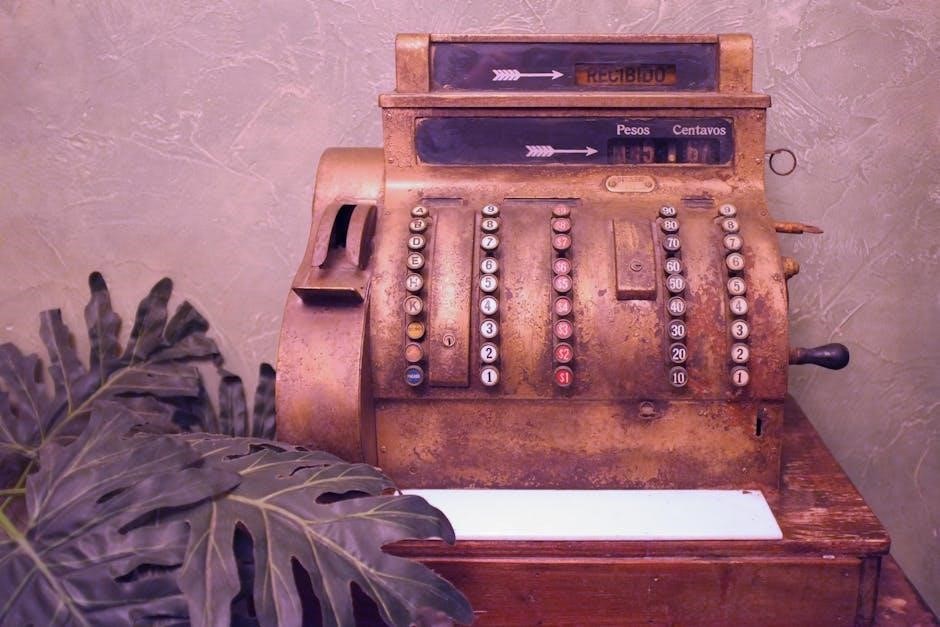
The Sharp XE-A407’s control panel is designed for efficient operation, though its layout requires familiarization. Key components include the numeric keypad, used for direct data entry and navigating menus. Above this, you’ll find function keys, often labeled with icons representing common actions like ‘Clear,’ ‘Enter,’ and ‘Cancel.’ These keys dynamically change function based on the current screen display.

To the right of the keypad is typically a dedicated section for mode selection – switching between programming, run, and other operational states. A prominent display screen provides visual feedback, showing entered data, menu options, and system status. Pay close attention to indicator lights, which signal power, error conditions, and peripheral connectivity. The panel’s overall design, as of April 14, 2026, prioritizes durability and ease of use, though referencing the manual is crucial for optimal performance. Explore each button to unlock the full potential of the XE-A407.
Basic Input Methods (Keyboard, Card Reader)
The Sharp XE-A407 offers several input methods for data entry and program loading. The primary method is the integrated keyboard, featuring numeric and function keys. Data is entered directly via the numeric keypad, while function keys activate specific commands or menu options. Accuracy is key; double-check entries before confirming.

Beyond the keyboard, the XE-A407 incorporates a card reader, enabling data transfer from compatible storage media. This is particularly useful for loading pre-written programs or backing up existing data. Ensure the card is correctly oriented before insertion to prevent damage. As of April 14, 2026, compatibility with various card formats should be verified in the specifications section. Utilizing both input methods provides flexibility and efficiency. Familiarize yourself with each to maximize the XE-A407’s capabilities and streamline your workflow.
Navigating the Menu System
The Sharp XE-A407 utilizes a hierarchical menu system for accessing its various functions and settings. Navigation is primarily achieved using the arrow keys on the keyboard, combined with the ‘Enter’ or ‘Select’ key to confirm choices. The current menu option is clearly highlighted on the display. Understanding this structure is crucial for efficient operation.
The main menu provides access to categories like ‘Program’, ‘Data’, ‘Setup’, and ‘Maintenance’. Each category contains submenus offering more specific options. Use the ‘Escape’ or ‘Back’ key to return to the previous menu level. As of April 14, 2026, referencing the detailed menu map (found in Appendix A) is recommended for new users. Explore each menu thoroughly to discover the full range of features. Remember to save any changes made within the setup menus before exiting.

Advanced Features and Functions
Explore powerful programming capabilities, data management tools, and customization options within the XE-A407. Refer to the April 14, 2026 manual for detailed instructions.
Programming and Customization Options
The Sharp XE-A407 offers extensive programming flexibility, allowing users to tailor the system to specific needs. Utilizing built-in scripting languages, you can automate tasks, create custom applications, and modify existing functionalities. This level of customization extends to the user interface, enabling personalized layouts and workflows.
Advanced users can leverage the XE-A407’s capabilities to develop sophisticated data processing routines and integrate with external systems. The manual, dated April 14, 2026, details the syntax and commands for effective programming. Customization isn’t limited to software; hardware configurations can also be adjusted to optimize performance. Explore options for memory allocation, peripheral settings, and communication protocols. Remember to consult the Internet Archive for supplementary resources and community-developed scripts. Proper documentation of all customizations is crucial for maintainability and future upgrades.
Data Backup and Restoration Procedures
Protecting your valuable data is paramount. The Sharp XE-A407 provides multiple options for data backup, including internal storage, external drives, and network locations. Regularly scheduled backups are strongly recommended to mitigate data loss due to hardware failure or accidental deletion. The manual, referencing information as current as April 14, 2026, details step-by-step instructions for each backup method.
Restoration procedures are equally critical. In the event of data corruption or system failure, you can quickly restore your data from a previous backup. The XE-A407’s restoration utility offers options for full or incremental restores, allowing you to minimize downtime. Explore the Internet Archive for user forums and troubleshooting guides related to data recovery. Always verify the integrity of your backups and test the restoration process periodically to ensure its effectiveness. Securely store backup media in a separate location to safeguard against physical disasters.
Troubleshooting Common Issues
Encountering problems with your Sharp XE-A407 is inevitable. This section addresses frequently reported issues and provides practical solutions. Common problems include paper jams, printer connectivity errors, and software glitches. The manual, updated as of April 14, 2026, offers detailed diagnostic steps for each scenario. Before seeking advanced support, consult the troubleshooting guide to attempt self-resolution.
Error messages are your first clue. Carefully note the error code displayed and refer to the comprehensive error code list in the manual (or online resources like the Internet Archive). Often, a simple restart or cable check can resolve the issue. For persistent problems, consider resetting the device to factory defaults (after backing up your data!). Remember to document the steps you’ve taken, as this information will be valuable if you need to contact technical support. Prioritize safety and avoid attempting repairs beyond your expertise.

Maintenance and Care
Regular cleaning and upkeep are vital for optimal performance of your Sharp XE-A407. Refer to the manual (dated 04/14/2026) for detailed procedures and error code explanations.
Cleaning and Routine Maintenance
Maintaining your Sharp XE-A407’s pristine condition ensures longevity and reliable operation. Dust accumulation is a primary concern; use a soft, lint-free cloth to gently wipe down the exterior surfaces regularly – ideally weekly. Avoid abrasive cleaners or solvents, as these can damage the finish. Specifically, the control panel requires delicate handling.
For the card reader slot, a can of compressed air can dislodge any debris. Never insert objects into the slot. Periodically inspect the paper path for paper fragments or obstructions. Refer to the manual (dated 04/14/2026, sourced from Internet Archive records) for detailed diagrams illustrating the paper path.
Internal cleaning should only be performed by qualified technicians. Attempting to disassemble the unit yourself may void the warranty. Consistent, gentle exterior cleaning, coupled with careful handling, will significantly extend the life of your Sharp XE-A407. Remember to power off the device before any cleaning procedure.
Error Codes and Their Meanings
The Sharp XE-A407 utilizes a comprehensive error code system to diagnose operational issues. These codes, displayed on the control panel, provide valuable insight into the nature of the problem. Consult the detailed error code table within this manual (referenced as current as of 04/14/2026 via Internet Archive data) for specific troubleshooting steps.
Common errors include “E01” indicating a paper jam, “E02” signaling a printer malfunction, and “E03” denoting a memory error. Do not attempt repairs based solely on the error code; always refer to the corresponding explanation and recommended solution. Some errors may require professional servicing.
Ignoring error codes can lead to further damage. Regularly checking the Internet Archive for updated error code lists is advisable, as firmware updates may introduce new codes. A complete listing, with detailed explanations, is crucial for effective maintenance and problem resolution of your Sharp XE-A407.
Resources and Support
For comprehensive support regarding your Sharp XE-A407, several resources are available. The official Sharp website (check Internet Archive records dated 04/14/2026 for current links) provides downloadable drivers, FAQs, and troubleshooting guides. A dedicated support forum allows users to share solutions and seek assistance from the community.
Sharp’s customer service team can be reached via phone or email, offering direct assistance with complex issues. Additionally, authorized service centers provide professional repair services. The Internet Archive hosts archived versions of past support documentation, potentially useful for older software versions.

Remember to have your XE-A407’s serial number readily available when contacting support. Regularly checking for firmware updates ensures optimal performance and access to the latest features. Utilizing these resources will maximize your experience with the Sharp XE-A407.