The Sage Barista Express offers a comprehensive guide, unlocking its potential with detailed instructions for installation, operation, and consistent espresso creation.
What is the Sage Barista Express?
The Sage Barista Express (models BES875, BES870UK, SES875) is a semi-automatic espresso machine designed for home use, bridging the gap between convenience and barista-quality coffee. This machine empowers users to grind beans, dose, tamp, and extract espresso – all within a single unit.
The instruction manual details how it integrates a conical burr grinder, allowing for fresh grinding directly into the portafilter. It’s more than just a coffee maker; it’s a system for crafting personalized espresso beverages. The manual emphasizes safety features, including the recommendation for a 30mA RCD/GFCI, and guides users through each step, from initial setup to daily cleaning, ensuring optimal performance and longevity.
Key Features and Benefits
The Sage Barista Express boasts several key features detailed in its instruction manual. These include an integrated conical burr grinder for fresh, consistent grounds, and precise temperature control (PID) for optimal extraction. Users benefit from manual control over espresso parameters, allowing for customization.
The manual highlights the machine’s ability to deliver café-quality espresso at home, alongside the convenience of direct-to-portafilter grinding. It also emphasizes the steam wand’s power for creating textured milk for lattes and cappuccinos. Furthermore, the manual provides comprehensive care and cleaning instructions, ensuring the machine’s longevity and consistent performance, maximizing the user experience.
Model Numbers (BES875, BES870UK, SES875)
The Sage Barista Express instruction manual covers multiple model numbers, including BES875, BES870UK, and SES875. While core functionality remains consistent across these models, slight variations may exist in regional specifications or included accessories.
The manual explicitly states that users should refer to the specific diagrams and instructions relevant to their model number. This ensures correct setup, operation, and maintenance. ManualsLib and Argos product listings confirm the BES870UK is a UK-specific version. Understanding your model number is crucial for accessing the correct support resources and troubleshooting effectively, as detailed within the comprehensive guide.

Safety Precautions
The Sage Barista Express manual strongly recommends installing a 30mA residual current safety switch for enhanced electrical safety during appliance operation.
Electrical Safety (RCD/GFCI Recommendation)
To ensure user safety when operating the Sage Barista Express, the instruction manual emphasizes the critical importance of electrical safety precautions. Specifically, it is highly recommended to install a Residual Current Device (RCD), also known as a Ground Fault Circuit Interrupter (GFCI), rated at 30mA or less. This device provides an additional layer of protection against electric shock hazards.
An RCD/GFCI quickly interrupts the electrical circuit if a leakage current is detected, minimizing the risk of serious injury. The manual clearly states this isn’t a replacement for standard electrical safety practices, but a supplementary measure. Always ensure the appliance is properly grounded and used with a compatible power supply. Regular checks of the RCD/GFCI functionality are also advised for continued safety;
General Safety Guidelines
The Sage Barista Express instruction manual details crucial general safety guidelines for all users. It stresses the importance of reading all instructions before operating the machine, and keeping the manual readily available for future reference. Careful attention should be paid to avoiding contact with hot surfaces during and after operation, as components reach high temperatures.
The manual also cautions against operating the appliance with a damaged cord or plug, and advises against using extension cords. Supervision is necessary when the machine is used near children. Furthermore, it highlights the importance of unplugging the appliance from the outlet when not in use and before cleaning, preventing accidental activation and ensuring safe maintenance.
Important Warnings
The Sage Barista Express instruction manual prominently features several important warnings. It explicitly states to never immerse the appliance, cord, or plug in water or other liquids to prevent electric shock. Users are warned against operating the machine if it exhibits any signs of malfunction, and to immediately discontinue use if damage is detected.
The manual cautions against attempting to repair the appliance oneself, recommending professional service for any repairs. Hot steam and water are present during operation, requiring extreme caution to avoid burns. Furthermore, it warns against blocking the steam wand opening, as this could cause a pressure build-up and potential hazard. Always follow the outlined safety procedures diligently.
Components Overview
The Sage Barista Express includes identified machine parts, a portafilter with baskets, and a milk jug alongside essential accessories for optimal brewing.
Machine Parts Identification
Understanding the components of your Sage Barista Express is crucial for successful operation. Key parts include the water tank, easily removable for filling and cleaning, and the bean hopper, designed to hold fresh coffee beans. The integrated conical burr grinder ensures consistent grinding.
The control panel features intuitive buttons for power, single/double shot extraction, steam, and hot water. The stainless steel steam wand allows for milk texturing. The group head securely holds the portafilter during extraction. Familiarize yourself with the drip tray, which is also removable for easy cleaning, and the housing which contains all internal mechanisms. Knowing each part’s function will enhance your brewing experience and maintenance capabilities.
Portafilter and Baskets
The Sage Barista Express utilizes a commercial-style portafilter, essential for delivering pressure during espresso extraction. It comes with both single and dual-wall filter baskets. The single-wall basket is ideal for experienced users seeking full flavor control, while the dual-wall basket is more forgiving for beginners.
Ensure the basket is properly seated within the portafilter before locking it into the group head. Regularly clean the portafilter and baskets to remove coffee residue, preventing clogging and ensuring optimal espresso quality. Proper basket selection and consistent tamping are vital for achieving a balanced and flavorful shot. Understanding these components is key to mastering espresso creation.
Milk Jug and Accessories
The Sage Barista Express includes a stainless steel milk jug designed for optimal milk frothing. Its shape facilitates swirling and stretching the milk to create microfoam – essential for latte art and creamy cappuccinos. Alongside the jug, you’ll find accessories like a cleaning tool for the group head and a measuring spoon for precise coffee dosing.
Properly purging the steam wand after each use is crucial, and the included cleaning cloth aids in maintaining hygiene. The machine also often comes with a tamper, though some users prefer to upgrade to a calibrated tamper for consistent tamping pressure. Familiarizing yourself with these accessories enhances the overall brewing experience.
Setting Up Your Barista Express
Initial setup involves filling the water tank, installing the filter, and powering on the machine to begin the heating process for optimal performance.
Initial Setup and First Use
Before your first brew, unpack your Sage Barista Express and remove all packaging materials. Thoroughly inspect the machine for any damage. Rinse the water tank, portafilter, and baskets with warm water. Install the water filter into the water tank, ensuring it’s securely fitted – this significantly improves water quality and taste.
Place the machine on a stable, level surface. Connect the power cord to a grounded outlet, ideally protected by a 30mA RCD/GFCI. Run a full tank of water through the machine without coffee to cleanse the internal system. This initial flush primes the pump and removes any manufacturing residue. Follow the on-screen prompts, if available, for guided setup.
Water Tank Filling and Filter Installation
To fill the water tank, remove it from the machine and locate the maximum fill line. Use fresh, filtered water for optimal espresso quality. The Sage Barista Express utilizes a water filter to reduce scale buildup and enhance flavor. Before first use, and regularly thereafter, install the provided water filter.
Soak the filter in cold water for five minutes, then insert it into the designated holder within the water tank. Ensure the filter is securely seated. The filter should be replaced every three months, or after 60 full tanks, depending on water hardness. Consistent filter use prolongs machine life and maintains espresso taste.
Powering On and Initial Heating
To power on your Sage Barista Express, connect the machine to a grounded electrical outlet. The power switch is located on the rear of the appliance. Upon activation, the machine will begin its initial heating phase. Allow approximately 30 seconds for the machine to reach optimal temperature – indicated by the ready light.
During heating, the machine performs a self-check. The digital display will illuminate, and internal components will activate. Avoid operating the machine before it’s fully heated, as this can affect espresso quality. The initial heat-up prepares the group head and steam wand for use, ensuring consistent performance.
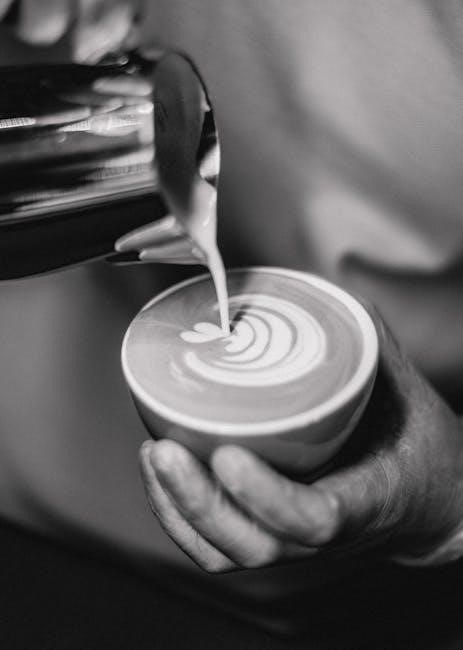
Making Espresso
Espresso extraction involves grinding beans, precise dosing and tamping, then utilizing the machine to produce rich, flavorful espresso shots consistently.
Grinding Coffee Beans
Achieving the perfect espresso begins with properly ground coffee beans. The Sage Barista Express features an integrated conical burr grinder, allowing for precise control over grind size. Adjusting the grind is crucial; finer grinds are suited for shorter extraction times, while coarser grinds work best for longer ones.
Start with the recommended settings and adjust incrementally based on your taste and the observed extraction. The manual emphasizes experimenting to find the sweet spot for your chosen beans. Freshly ground beans are paramount for optimal flavor. The grinder delivers beans directly into the portafilter, ensuring minimal loss of aroma and maximizing freshness. Consistent grind size is key to even extraction and a balanced espresso.
Dosing and Tamping
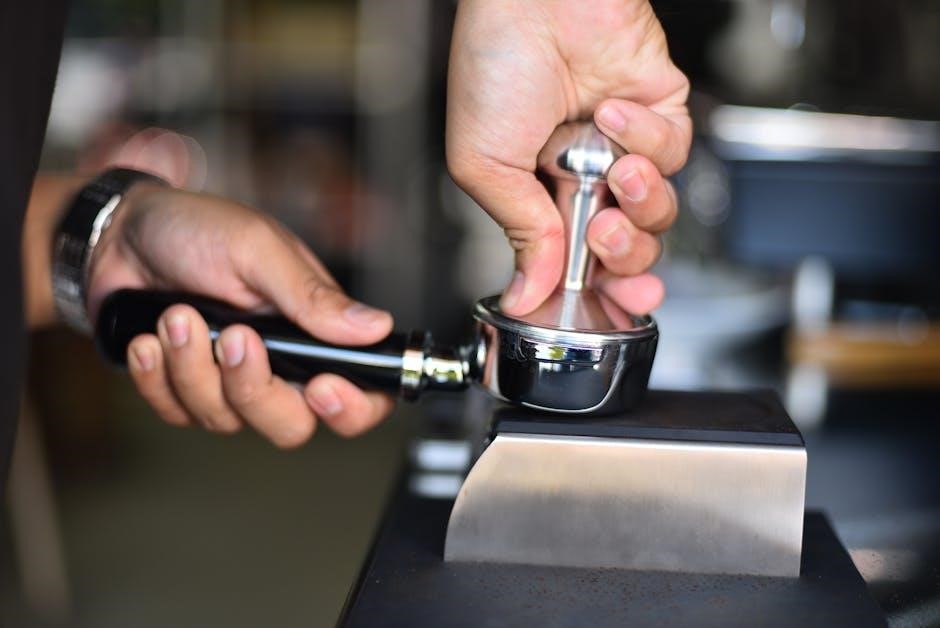
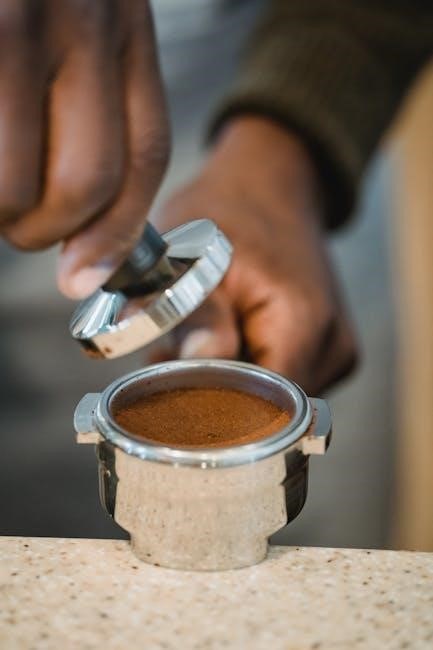
Consistent dosing is vital for repeatable espresso shots. The Sage Barista Express allows for manual dose control, ensuring you use the correct amount of coffee grounds – typically between 18-22 grams for a double shot. After grinding, distribute the grounds evenly within the portafilter basket.
Tamping compresses the grounds, creating resistance for the water to flow through; Apply approximately 30 pounds of pressure with the included tamper, ensuring a level and consistent tamp. An uneven tamp can lead to channeling, resulting in an uneven extraction. The manual stresses the importance of a firm, level tamp for optimal espresso quality and a rich crema.
Extracting Espresso Shots
Initiate extraction by firmly locking the portafilter into the group head. Select either single or double shot volume using the corresponding button on the Sage Barista Express. The machine will automatically begin pre-infusion, gently wetting the grounds before applying full pressure.
Monitor the extraction; a perfect shot should take around 20-30 seconds. Look for a rich, reddish-brown crema forming on top. The manual advises observing the flow – it should resemble warm honey. Adjust grind size if the extraction is too fast (blonde, watery) or too slow (dark, dripping). Consistent practice and observation are key to mastering espresso extraction with your Barista Express.
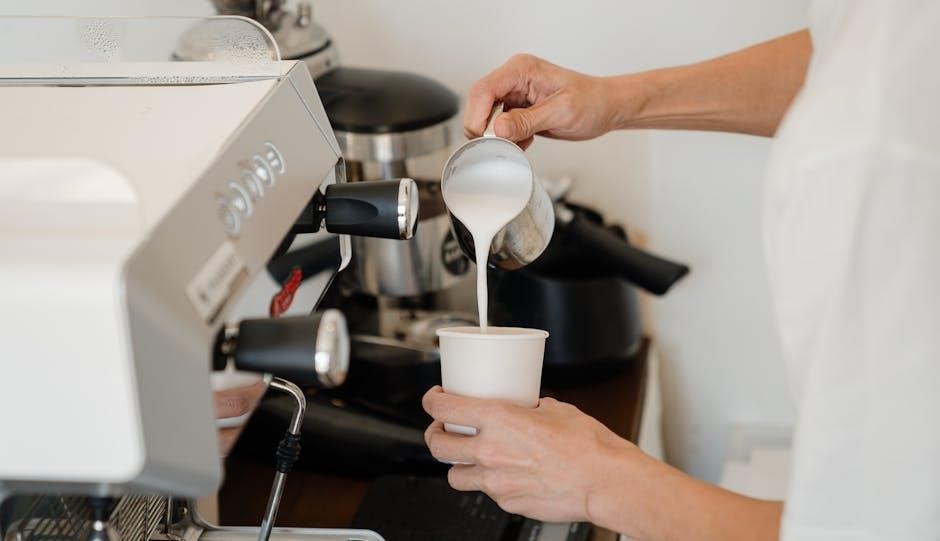
Milk Frothing
The Sage Barista Express allows for steaming milk to create lattes and cappuccinos, utilizing specific techniques detailed within the instruction manual for optimal results.
Steaming Milk for Lattes and Cappuccinos
Achieving perfectly textured milk is crucial for café-quality beverages. The Sage Barista Express instruction manual provides detailed guidance on steaming milk for both lattes and cappuccinos. Begin by purging the steam wand to remove any condensation. Submerge the wand tip just below the surface of the milk, creating a vortex.
This introduces air, expanding the milk’s volume – essential for creating microfoam. Lower the jug slightly as the milk heats, maintaining the vortex. Once the desired temperature is reached (typically around 140-150°F / 60-65°C), submerge the wand fully to heat the remaining milk.
The manual emphasizes wiping the wand immediately after use and purging again to prevent milk buildup. Mastering this technique, as outlined in the guide, unlocks the full potential of your Barista Express.
Milk Frothing Techniques
The Sage Barista Express manual details several milk frothing techniques for optimal results. It stresses the importance of using cold milk – whole milk is recommended for best texture. Begin with a full stainless steel jug, as the milk will expand. Purge the steam wand before each use to ensure dry steam.
The manual illustrates how to stretch the milk initially, creating microfoam by introducing air, then texturing it by swirling the jug. Achieving a “paint-like” consistency is the goal. Different techniques are suggested for varying milk types (almond, soy, etc.).
Consistent practice, guided by the manual’s instructions, will allow you to create velvety smooth milk for lattes, cappuccinos, and other specialty drinks, enhancing your overall coffee experience.
Cleaning the Steam Wand
The Sage Barista Express instruction manual emphasizes immediate cleaning of the steam wand after each use. This prevents milk from drying and becoming difficult to remove. Immediately after frothing, purge the wand to remove any residual milk.
The manual instructs to wipe the wand with a damp cloth. For stubborn milk residue, a more thorough cleaning is required. The wand can be disassembled for deeper cleaning, as detailed in the manual’s diagrams.
Regular cleaning ensures optimal performance and hygiene. Neglecting this step can affect steam pressure and milk texture. Following the manual’s guidance will prolong the life of your machine and maintain consistently high-quality results.
Care and Cleaning
The Sage Barista Express manual details daily cleaning, descaling, and backflushing procedures to maintain peak performance and longevity of your espresso machine.
Daily Cleaning Procedures
Consistent daily cleaning is crucial for maintaining the performance and hygiene of your Sage Barista Express. After each use, wipe down the machine’s exterior with a damp cloth. Remove the portafilter and discard used coffee grounds. Rinse the portafilter and baskets thoroughly with warm water, ensuring no residue remains.
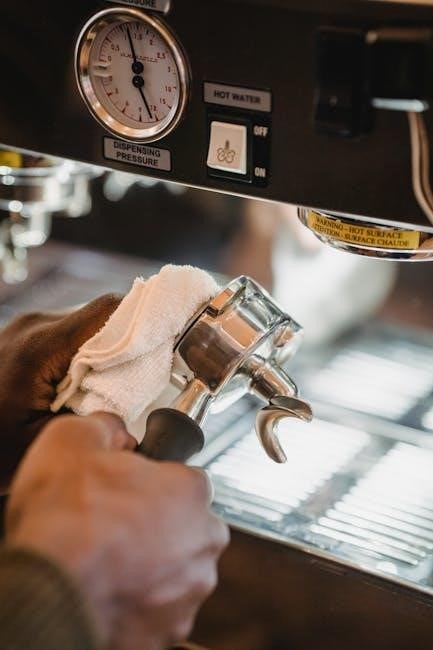
The drip tray should be emptied and cleaned daily to prevent overflow and buildup. Wipe the group head with a damp cloth after each extraction to remove coffee oils. Purge the steam wand immediately after frothing milk by briefly opening the steam valve to clear any milk residue. Finally, wipe the steam wand with a damp cloth.
Regular adherence to these simple steps, as outlined in the instruction manual, will ensure a consistently excellent coffee experience and prolong the life of your machine.
Descaling the Machine
Regular descaling is vital to remove mineral buildup within your Sage Barista Express, ensuring optimal performance and longevity. The frequency depends on water hardness; the instruction manual provides guidance. Use a descaling solution specifically designed for coffee machines, following the manufacturer’s instructions carefully.
The descaling process involves filling the water tank with the descaling solution and running it through the machine’s brewing cycle and steam wand. Subsequently, thoroughly rinse the system by running several tanks of fresh water through both functions to eliminate any residual descaling solution.
Ignoring descaling can lead to reduced heating efficiency, altered coffee flavor, and potential machine damage. Refer to your user manual for detailed, step-by-step instructions.
Backflushing the Machine
Backflushing is a crucial cleaning procedure for your Sage Barista Express, removing coffee oils and residue from the group head and internal pathways. This process utilizes a blind filter basket in place of a regular portafilter basket.
With the blind filter inserted, run the pump in short bursts, alternating between running and stopping, to create pressure and force the cleaning solution (or water) back through the system. This action dislodges built-up grime.
Follow the manual’s specific instructions regarding cleaning tablets or solutions. Rinse thoroughly with fresh water after backflushing to ensure no residue remains, maintaining optimal espresso quality and machine health.

Troubleshooting Common Issues
This section addresses typical problems like machine startup failures, espresso extraction inconsistencies, and milk frothing difficulties, offering solutions for optimal performance.
Machine Not Turning On
If your Sage Barista Express fails to power on, begin with the basics: ensure the power cord is securely connected to both the machine and a functioning wall outlet. Verify the outlet is receiving power by testing it with another device. Check if a Residual Current Device (RCD) or Ground Fault Circuit Interrupter (GFCI) has tripped – reset it if necessary, as these are recommended for added safety.
Next, confirm the machine’s power switch is fully engaged. If the issue persists, consult the user manual for specific troubleshooting steps related to internal fuses or potential electrical faults. Do not attempt to repair the machine yourself; contact Sage customer support for assistance to avoid potential hazards and maintain warranty validity. A qualified technician should handle any internal repairs.
Espresso Extraction Problems
Experiencing issues with espresso extraction? First, ensure your coffee grind is appropriate – too fine can cause over-extraction and bitterness, while too coarse leads to under-extraction and sourness. Verify you’re tamping with consistent pressure (around 30lbs) for a level, even puck.
Check the water tank is adequately filled and the machine has completed its initial heating cycle. A clogged portafilter or basket can also restrict flow; ensure they are clean. If the espresso flows too quickly (blonding), adjust the grind finer. If it drips slowly or not at all, try a coarser grind; Refer to the manual for detailed guidance on grind size and extraction times for optimal results.
Milk Frothing Issues
Struggling to achieve silky smooth milk? Ensure the steam wand is purged before and after use to remove condensation. Submerge the wand tip just below the surface of the milk initially, creating a vortex to incorporate air.
Listen for a gentle hissing sound – this indicates proper aeration. Once the milk volume increases, lower the jug to heat the milk without adding more air. If the milk isn’t frothing, check the steam pressure and wand position. For larger quantities, use a larger milk jug. Clean the steam wand immediately after each use to prevent milk buildup, as detailed in the manual’s care and cleaning section.