Chevy Manual Transmissions: A Comprehensive Overview (Updated 12/11/2025)
Chevrolet’s manual transmissions have a rich history, evolving from simpler three-speed designs to sophisticated six-speed options, impacting performance and driver engagement across various models.
Recent reports from December 11, 2025, highlight concerns regarding fuel mileage in newer Chevrolet transmissions (2020-2025), with some owners experiencing a noticeable decrease.

Furthermore, instances of transmission failures in 2025 GMC trucks, even with minimal mileage, are surfacing, prompting investigations into potential manufacturing or design issues.
Historical Overview of Chevy Manual Transmissions
Chevrolet’s journey with manual transmissions began in the early days of automotive production, mirroring the industry’s shift towards driver-controlled gear selection. Initially, Chevy vehicles featured simple three-speed manual transmissions, providing basic functionality for the era. As automotive technology advanced, so did Chevy’s transmission offerings, with the introduction of four-speed manuals gaining prominence, particularly during the muscle car boom.
These early transmissions were robust and relatively straightforward in design, prioritizing durability and ease of maintenance. However, they lacked the sophistication of later models, offering limited gear ratios and less refined shifting experiences. The evolution continued through the decades, driven by demands for improved fuel efficiency, performance, and driver comfort.
The late 20th century saw the arrival of more advanced manual transmissions, like the New Venture Gearbox (NVG), offering increased gear counts and improved synchronization. Today, Chevy continues to offer manual transmissions in select models, catering to enthusiasts who appreciate the engaging driving experience they provide, while also collaborating with companies like Tremec to deliver high-performance options.
Early Chevy Manuals: Three-Speed and Four-Speed (Pre-1980s)
Prior to the 1980s, Chevrolet primarily utilized three and four-speed manual transmissions, defining the driving experience for a generation of automotive enthusiasts. The three-speed manuals were commonplace in earlier Chevy models, offering a simple and durable solution for everyday driving. These transmissions were known for their ruggedness and ease of repair, making them a staple in work trucks and entry-level vehicles.
As performance expectations increased, Chevy transitioned to four-speed manuals, particularly in muscle cars and performance-oriented models. These four-speed transmissions provided a wider range of gear ratios, enhancing acceleration and overall driving dynamics. The shift to four-speeds allowed drivers greater control over engine RPMs, optimizing performance for various driving conditions.
These early Chevy manuals, while lacking the refinement of modern transmissions, were incredibly robust and capable. They represented a pivotal era in automotive engineering, laying the foundation for the more sophisticated manual transmissions that would follow, and remain highly sought after by collectors and restoration enthusiasts today.
The Muncie Four-Speed: A Muscle Car Icon

The Muncie four-speed manual transmission stands as a legendary component in Chevrolet’s muscle car history, becoming synonymous with high performance and raw driving excitement. Produced from 1963 to 1970, the Muncie transmission was a favorite factory option for iconic models like the Corvette, Camaro, and Chevelle.
Its robust design and smooth shifting action made it ideally suited for handling the powerful V8 engines of the era. Different versions of the Muncie four-speed were available, including the widely recognized M21 and M22, each offering unique gear ratios and strengths. The M22, in particular, featured a heavy-duty design intended for high-horsepower applications.
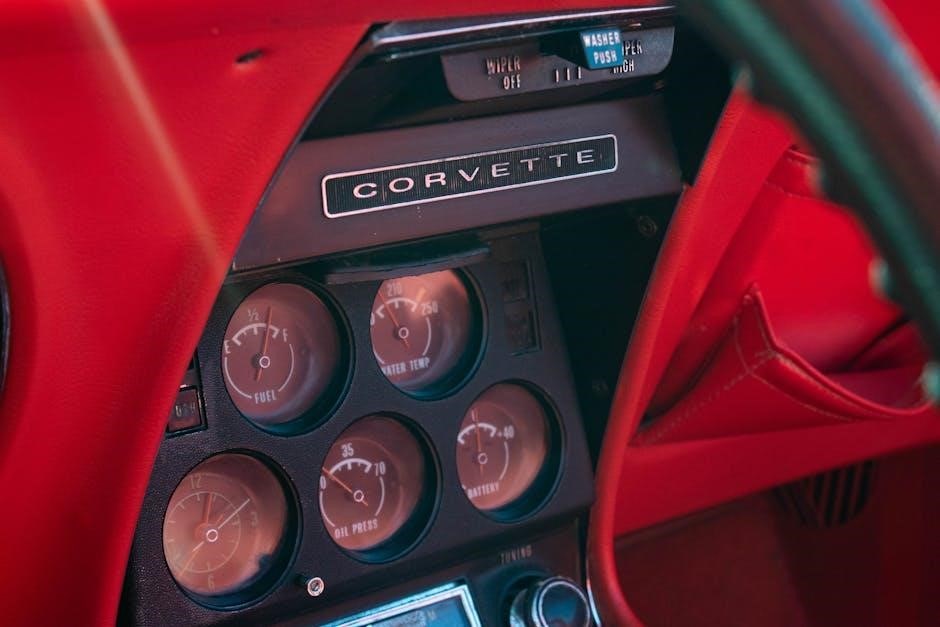
Today, the Muncie four-speed remains highly coveted by collectors and restorers, representing a golden age of American muscle. Original Muncie transmissions command significant value, and reproduction units are popular for maintaining authenticity in classic Chevy restorations. It’s a true icon of automotive engineering.
New Venture Gearbox (NVG) Transmissions (1990s ─ 2000s)

During the 1990s and 2000s, Chevrolet transitioned to New Venture Gearbox (NVG) transmissions, a collaboration between General Motors and New Venture Gear. These transmissions represented a significant upgrade in strength and refinement compared to earlier designs, catering to the demands of increasingly powerful trucks and SUVs.
The NVG family included several models, most notably the NV3500 and NV5600. These transmissions were designed to handle higher torque loads and offer smoother operation; They became standard equipment in popular Chevrolet and GMC trucks, providing a durable and reliable manual transmission option.
The adoption of NVG transmissions marked a shift towards more sophisticated manual transmission technology within the Chevrolet lineup. These gearboxes offered improved shift quality and overall durability, solidifying their place as a key component in many late-model Chevy vehicles. They remain a popular choice for enthusiasts seeking a robust manual transmission.
NV3500 Transmission: Common Applications and Reliability
The NV3500 transmission, a cornerstone of Chevrolet’s manual transmission offerings during the 1990s and 2000s, found widespread application in a variety of full-size trucks and SUVs. Commonly paired with 4.3L V6 and 5.7L V8 engines, it became a staple in vehicles like the Chevrolet Silverado and GMC Sierra.
Known for its robust construction and relative simplicity, the NV3500 generally enjoys a reputation for good reliability. While not indestructible, it can withstand considerable abuse and maintain functionality with proper maintenance. Owners frequently report high mileage without major issues, making it a favored choice for those seeking a dependable manual transmission.
However, like any mechanical component, the NV3500 isn’t without its potential weaknesses. Common concerns include wear in the synchronizers, leading to difficulty shifting, and potential issues with the clutch master and slave cylinders. Regular fluid changes and attentive driving habits contribute significantly to its longevity.
NV5600 Transmission: Heavy-Duty and Durability

The NV5600 transmission represents a significant step up in strength and capability compared to the NV3500, designed specifically for heavy-duty applications within Chevrolet and GMC’s truck lineup. Primarily found behind the powerful Duramax diesel engines, it was engineered to handle substantial torque output, making it ideal for towing and hauling.
This six-speed manual transmission boasts a reputation for exceptional durability, often exceeding expectations even under demanding conditions. Its robust internal components and reinforced casing contribute to its longevity, allowing it to withstand the stresses of frequent heavy loads. Owners consistently praise its ability to endure rigorous use.
Despite its inherent strength, the NV5600 isn’t immune to potential issues. Common concerns include wear on the shift forks and synchronizers, particularly with aggressive shifting. Maintaining proper fluid levels and employing a smooth shifting technique are crucial for maximizing its lifespan and preventing premature wear.
Tremec Transmissions in Chevy Applications
Tremec transmissions have become increasingly popular in Chevrolet applications, particularly among enthusiasts seeking enhanced performance and a more engaging driving experience. While not originally factory equipment in most Chevy vehicles, Tremec’s aftermarket support and superior design have made them a favored upgrade option.
Tremec offers a range of manual transmissions suitable for various Chevy models, from classic muscle cars to modern performance vehicles. Their transmissions are renowned for their precise shifting, robust construction, and ability to handle significant power. This makes them a compelling alternative to older, less capable factory transmissions.
The aftermarket availability of adapter kits and supporting components simplifies the installation process, allowing enthusiasts to seamlessly integrate Tremec transmissions into their Chevy projects. This widespread support, coupled with the transmissions’ inherent quality, has solidified Tremec’s position as a leading provider of performance manual transmissions for Chevrolet owners.
Tremec T56: Performance and Aftermarket Support
The Tremec T56 is arguably the most iconic and widely adopted Tremec transmission in Chevrolet performance circles. Originally designed for the GM F-body cars (Camaro and Firebird), its robust design and six-speed configuration quickly made it a favorite for muscle car enthusiasts and beyond.
The T56’s strength lies not only in its inherent durability but also in the extensive aftermarket support available. Countless companies offer upgrades, rebuild kits, and modified components to enhance its performance and reliability. This includes stronger gears, improved synchronizers, and various shift handle options.
Adapters allow installation into a wide range of Chevrolet vehicles, including older models like the Tri-Five Chevy and newer trucks. The T56’s ability to handle high horsepower and torque levels, combined with its relatively affordable price point and readily available parts, ensures its continued popularity as a go-to transmission upgrade for Chevy owners seeking a superior driving experience.
Chevy Manual Transmission Issues and Common Problems
Chevrolet manual transmissions, while generally reliable, aren’t immune to issues. Older models, particularly those predating the New Venture Gearbox (NVG) era, can suffer from wear and tear on synchronizers, leading to difficulty shifting, especially into specific gears. Leaks from seals are also common in older units, requiring replacement.
More recently, reports indicate potential problems with newer Chevy transmissions (2020-2025). Some owners are experiencing premature transmission failures, even with low mileage, as highlighted by a 2025 GMC truck owner needing a tow shortly after purchase. This suggests potential quality control or design flaws.
Furthermore, issues with the 5.3 Vortec engine, such as cylinder misfires and ignition coil failures, can sometimes seem like transmission problems due to the resulting erratic engine performance. Proper diagnosis is crucial to avoid misdirected repairs. Addressing these issues promptly is vital for maintaining vehicle reliability.
Cylinder Misfires and Ignition Coil Failures (5.3 Vortec)
The 5.3 Vortec engine, commonly paired with Chevy manual transmissions in Silverados and other models, is known for a susceptibility to cylinder misfires and ignition coil failures. These issues often manifest as rough idling, reduced power, and a noticeable stumble during acceleration. Misfires frequently occur on cylinders 1, 3, 5, and 7, suggesting a potential pattern related to the engine’s firing order and coil placement.

While seemingly engine-related, these problems can be mistaken for transmission issues. A misfiring engine creates inconsistent power delivery, which can feel like slipping gears or erratic shifting. Correct diagnosis is crucial; simply addressing the transmission won’t resolve the underlying engine problem.
Replacing faulty ignition coils is a common fix, but persistent misfires may indicate deeper issues like worn spark plugs, fuel injector problems, or even internal engine damage. A thorough diagnostic scan and compression test are recommended to pinpoint the root cause.
Transmission Failures in Newer Models (2020-2025)
Recent reports, as of December 11, 2025, indicate a concerning trend of transmission failures in newer Chevrolet and GMC models (2020-2025). A particularly alarming case involved a 2025 GMC truck experiencing complete transmission failure with only 900 miles on the odometer, requiring a tow to the dealership. Initial diagnoses focused on the transmission control module (PCM), which was replaced and reprogrammed, though the underlying cause remains under investigation.
These failures aren’t isolated incidents. Online forums dedicated to Duramax diesel owners and enthusiasts are filled with discussions about similar issues, suggesting a potential systemic problem. The quick onset of failure, even before the vehicle is fully broken in, raises questions about manufacturing defects or design flaws.
Owners experiencing these issues are encouraged to document all repairs and report them to Chevrolet and the National Highway Traffic Safety Administration (NHTSA) to potentially trigger a recall.
Fuel Mileage Concerns with Recent Chevy Transmissions (2020-2025)
A significant number of Chevrolet owners are reporting unexpectedly low fuel mileage in newer models (2020-2025), despite having the same engine, transmission, and rear-end gearing as previous, more fuel-efficient versions. One owner, upgrading from a 2020 model to a 2025, experienced a drop from 18 mpg mixed driving to a disappointing 14.5 mpg, maintaining identical driving habits.
This decline has sparked speculation that the Environmental Protection Agency (EPA) may have mandated stricter emissions controls, leading to engine “choking” and reduced fuel economy. Owners are questioning whether these changes prioritize emissions compliance over practical fuel efficiency.
Interestingly, some owners report that their 2020 models actually improved in fuel economy over time, further highlighting the discrepancy with the newer models. This issue is actively discussed in online forums, with owners seeking explanations and potential solutions.
Identifying Chevy Transmission Models
Accurately identifying your Chevrolet manual transmission is crucial for maintenance, repairs, and upgrades. Fortunately, resources exist to help decipher the often-complex world of Chevy gearbox codes. A key document, available online, provides a comprehensive table listing Chevrolet vehicle models from 1995-2018.
This table correlates each model with its corresponding transmission type, engine, and specific transmission model designation. Utilizing this resource, owners can pinpoint their transmission based on vehicle year, engine type, and original equipment specifications. Understanding these codes allows for precise parts ordering and informed discussions with mechanics or aftermarket suppliers.
Beyond this table, examining the transmission case itself can reveal identifying numbers or markings. However, these can sometimes be obscured or difficult to read. Consulting online forums and owner communities can also provide valuable insights and assistance in identifying your specific Chevy manual transmission.
Resources for Chevy Transmission Identification (1995-2018)
Pinpointing your Chevrolet manual transmission model between 1995 and 2018 relies on several accessible resources. A primary source is a detailed document, readily available online, which presents a comprehensive table. This table meticulously lists Chevrolet vehicle models alongside their corresponding transmission types, engine configurations, and specific transmission model designations.
This document serves as a foundational tool for accurate identification. Beyond this, dedicated online forums, particularly those focused on Chevy and GMC trucks, offer a wealth of community knowledge; Experienced members frequently assist with identifying transmissions based on vehicle information and provided codes.
Furthermore, parts websites often include compatibility checkers that can help narrow down potential transmission models based on your vehicle’s year, make, and engine. Utilizing a combination of these resources ensures a higher degree of accuracy when determining your Chevy transmission’s identity.
Maintenance and Repair of Chevy Manual Transmissions
Proper maintenance is crucial for extending the life of your Chevrolet manual transmission. Regular fluid checks and changes, typically every 30,000 to 60,000 miles depending on usage, are paramount. Using the correct fluid type, specified in your owner’s manual, is essential to avoid damage.
Inspecting the clutch linkage and throw-out bearing for wear is also vital. Addressing minor issues promptly can prevent more significant, costly repairs down the line. For repairs, access to aftermarket support is generally good, particularly for popular models like the Tremec T56.
Common repairs include clutch replacements, synchronizer replacements, and addressing oil leaks. Online forums dedicated to Chevy and GMC enthusiasts provide valuable DIY guides and troubleshooting advice. However, complex repairs are best left to qualified mechanics with experience in manual transmissions.
Aftermarket Support and Upgrades
The aftermarket for Chevy manual transmissions is robust, offering a wide range of upgrades for both performance and durability. Popular options include stronger clutches, upgraded synchronizers, and short-throw shifters to improve shift feel. For classic muscle cars utilizing the Muncie four-speed, complete rebuild kits and individual parts are readily available.
Tremec transmissions, particularly the T56, benefit from extensive aftermarket support, with numerous vendors offering gear sets, shafts, and cases for increased strength. Owners seeking to enhance their truck’s capabilities can explore options like heavy-duty clutches and transmission coolers.
Online forums and dedicated communities, such as those for Duramax diesel owners, serve as valuable resources for identifying compatible upgrades and sharing experiences. Careful research and selecting quality components are key to maximizing the benefits of aftermarket modifications.

Chevy Truck Legends Program & Owner Communities
Chevrolet’s “Truck Legends” program, initiated in 2016, demonstrates the brand’s commitment to rewarding loyal owners, offering perks like concert and sports tickets. This program fosters a strong sense of community among Chevy truck enthusiasts.
Beyond official programs, numerous online forums and communities cater specifically to Chevy and GMC owners. These platforms provide invaluable spaces for sharing knowledge, troubleshooting issues, and discussing modifications – including those related to manual transmissions.
Dedicated forums for Duramax diesel owners are particularly active, with members frequently exchanging information on transmission upgrades, maintenance, and repair. These communities often serve as a first point of call for owners experiencing transmission problems, offering practical advice and support. Active participation in these groups can significantly enhance the ownership experience.